Rules
What Can and Cannot Go in a Dumpster: The Loganville List
The accepted list is long and boring. The prohibited list is short, strictly enforced, and the reason loads occasionally get turned away. Here is both.
The short version
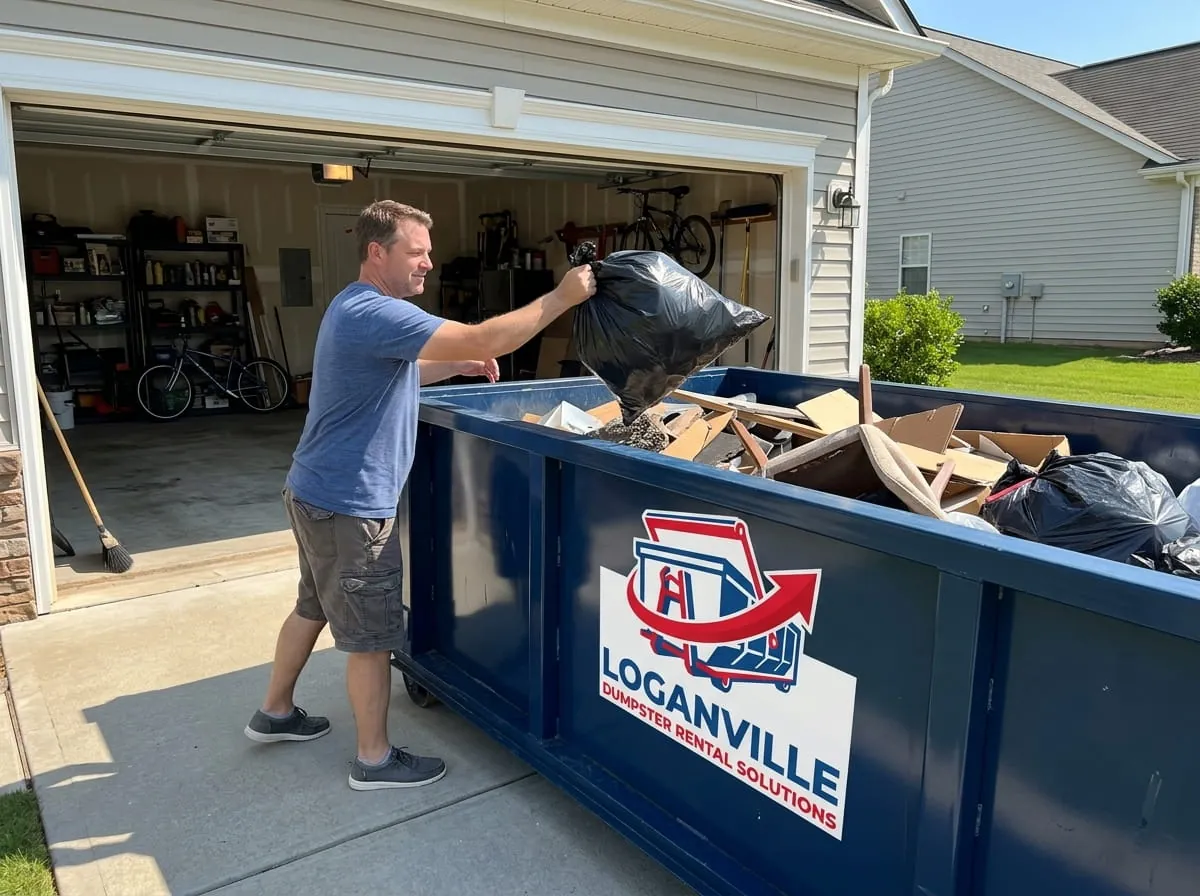
If it came out of a building, a yard or a household and it is solid, non-hazardous and not on fire, it can almost certainly go in the container. If it is liquid, toxic, pressurised, or contains asbestos or refrigerant, it cannot.
That covers about ninety-five percent of questions. The rest of this article is the other five percent, which is where the money and the headaches live.
What you can put in
Household and furniture
Sofas, armchairs, beds, mattresses and box springs, tables, wardrobes, bookcases, desks, carpets, rugs, curtains, clothing, linens, toys, books, paperwork, kitchenware, patio furniture, grills with the propane tank removed, exercise equipment and general clutter. No mattress surcharge on our containers.
Construction and renovation debris
Drywall, plaster and lath, timber, plywood and sheet goods, doors, windows, trim, kitchen cabinets, countertops, tiling, laminate and vinyl flooring, insulation, siding, soffit and fascia, guttering, fencing and deck timber, and general non-hazardous building material.
Worth stating plainly, because it is the clearest line in this whole market: the city will not collect construction debris — carpet and pad, wood, drywall and toilets are named specifically, along with automotive parts. A container is the route.
Basement and interior strip-outs
Panelling, suspended ceiling tile and grid, carpet and underlay, framing, drywall and old built-in furniture. Mostly bulky rather than heavy — unless it has been wet.
Roofing
Asphalt shingle in both three-tab and architectural, metal panels, felt and synthetic underlayment, flashing, drip edge and roof decking. Weight is the constraint, not acceptability.
Heavy and inert material
Concrete, block, brick, pavers, stone, rubble, tile and red clay soil. All fine, all heavy — these belong in a 10 yard. See the next section, because clean inert material has a cheaper route.
Scrap metal
Ductwork, conduit, steel studs, railings, farm sheeting and fencing. Worth separating if there is enough of it.
What is prohibited
- Liquids of any kind — paint, stains, varnish, thinners, solvents, oils and fuels
- Asbestos-containing material — common in pre-1980 floor tile, mastic and pipe lagging. Licensed abatement only
- Tyres
- Batteries of any kind
- Propane, gas and pressurised cylinders, including "empty" ones
- Refrigerant-charged equipment that has not been professionally evacuated
- Pesticides, herbicides and fertiliser
- Medical and infectious waste, including sharps
- Hot ashes or anything smouldering
- Contaminated soil
- Fluorescent tubes and older ballasts
The inert stream is a local opportunity
Most markets we work in have one expensive route for heavy material. This one does not, and it is worth knowing before you fill a container with slab.
There is an inert recycling facility on Highway 81 right here in Loganville that accepts and recycles earth and earth-like products, concrete, cured asphalt, rock, bricks, yard trimmings, and land clearing debris including stumps, limbs and leaves. It also sells clean fill, sand, dirt, gravel and crusher run, so material genuinely goes back out again.
There is also an inert landfill in Loganville taking construction and demolition debris, plus the Walton County landfill out on Highway 78 toward Monroe.
What this means practically: if you have a decent quantity of clean concrete, brick, rock or earth, it does not belong in a mixed container. Keep it clean and route it separately and you will pay less. The word doing the work there is clean — mixed with timber, drywall or general rubbish it is just heavy mixed waste again.
What the city will not collect
The City of Loganville's curbside service is more generous than most: two household bulk items per week in addition to the cart. But the exclusions are specific:
- Construction debris — carpet and pad, wood, drywall, toilets
- Automotive parts
- Extra bags and cardboard boxes, which are explicitly not bulk items and will not be collected
Yard waste has its own tight rules too. Small yard waste — leaves and grass clippings — must be in brown paper bags, to a maximum of ten bags per week, and no mulch or pine straw can be picked up at all. Larger material goes to the city chipper on its own schedule. Full detail here.
The grey areas people ask about
Pine straw and mulch
Genuinely excluded from city collection, and worth flagging because pine straw is everywhere in this part of Georgia and gets refreshed annually. Old pine straw goes in a container or to the inert facility with the rest of the yard trimmings.
Paint cans
Liquid paint is prohibited. Dried-out latex paint is generally acceptable — open the can and let it harden, with cat litter or sand to speed it up. Oil-based paint is hazardous wet or dry.
Treated timber
Acceptable in a mixed load, not in a clean-wood container. Deck and fence timber here is nearly always treated.
Stumps and root balls
Fine in our containers, and they have an inert route locally. Heavy because of the red clay that comes with them — shake the roots out where you can.
Appliances with a compressor
Fridges, freezers and window air conditioning units need the refrigerant professionally evacuated first. In a Georgia summer these fail regularly, so it comes up often.
Where the rest has to go
| Material | Where it goes |
|---|---|
| Clean concrete, brick, rock, asphalt, earth | The inert recycling facility on Highway 81, Loganville |
| Stumps, limbs, leaves, land clearing debris | Same inert facility, or a container |
| Construction debris, carpet, drywall, toilets | Not collected by the city - container or C&D landfill |
| Pine straw and mulch | Not collected by the city - container or inert facility |
| Paint, solvents, garden chemicals | Household hazardous waste collection events |
| Used motor oil, filters and vehicle batteries | Auto parts retailers |
| Tyres | Tyre retailers |
| Fridges, freezers, window AC units | Professional refrigerant evacuation first |
| Asbestos | Licensed abatement contractor only |
A pre-load checklist
- Walk the pile and pull out anything liquid, pressurised or chemical
- Check the garage for propane cylinders and old fuel cans
- Check any appliance with a compressor for refrigerant
- If the building predates 1980 and you are disturbing floor tile, mastic or pipe insulation, stop and get it tested
- Set aside clean concrete, brick and rock if there is enough to route separately
- Shake the red clay off root balls before they go in
- Set aside scrap metal if there is enough to be worth it
- Load flat and heavy first, bulky on top, and stop at the rail
Need a container in Loganville?
Call and describe the job. Three minutes on the phone gets you a size recommendation, a flat rate and a delivery window — and we will tell you if a smaller, cheaper container is the right answer.
Call (678) 345-8751